N3M0.
Going below.
An underwater ROV that brings mechanical design, electronics, and software into one physical system. A capstone project, built with a team of three.
The vehicle
A system that has
to work together.
N3M0 is an eight-thruster remotely operated underwater vehicle. The design brings a central hull tube, printed motor-mount frame, internal electronics tray, and sealed endcaps together in a compact assembly.
The project is still in progress. Current work is focused on completing the hardware, testing the electrical chain, and developing and integrating the software.
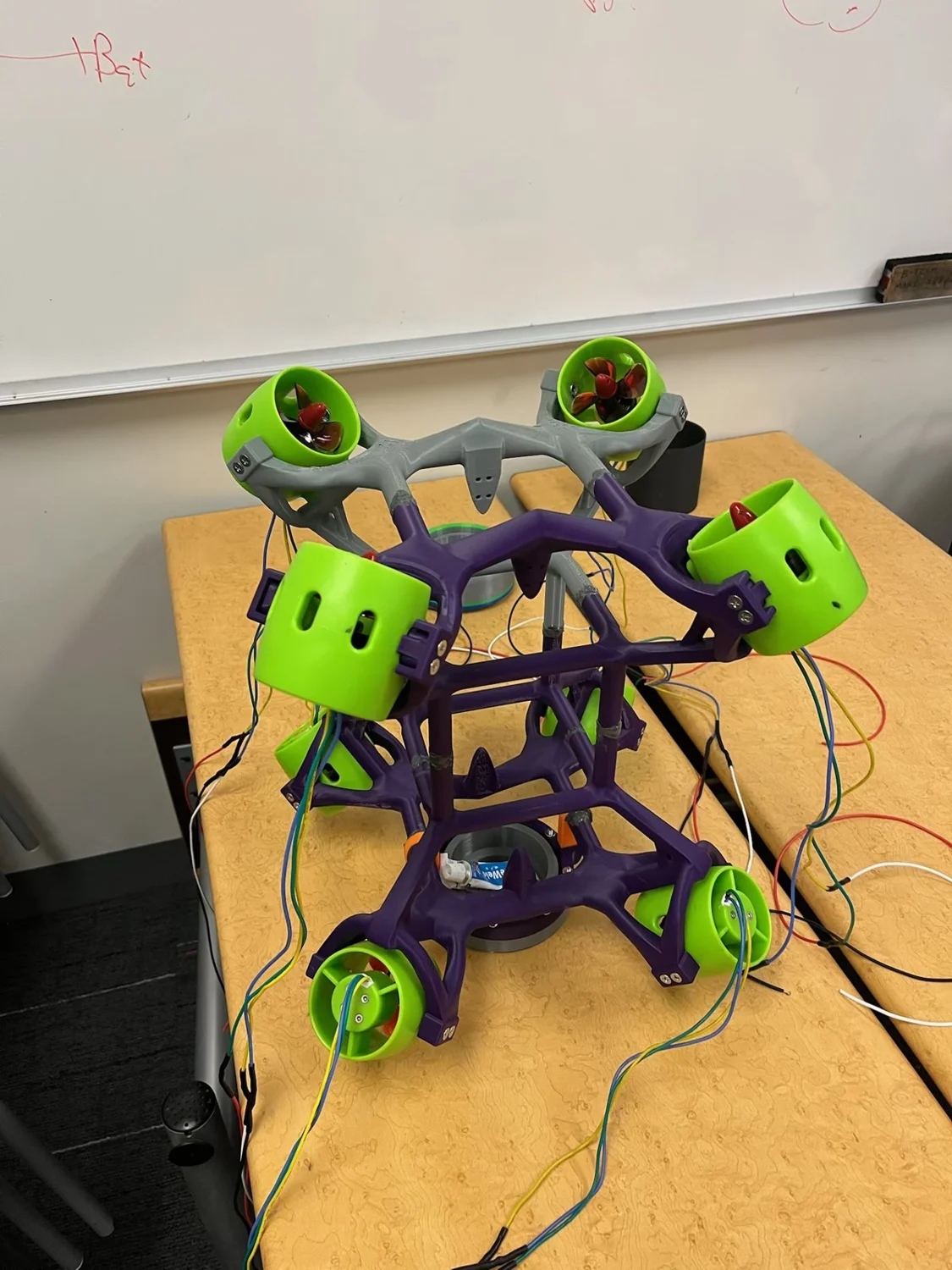
Team: Nicolas Polga, Nick Watson, and Noah Karmakar.
My contribution
Across the body,
boards, and code.
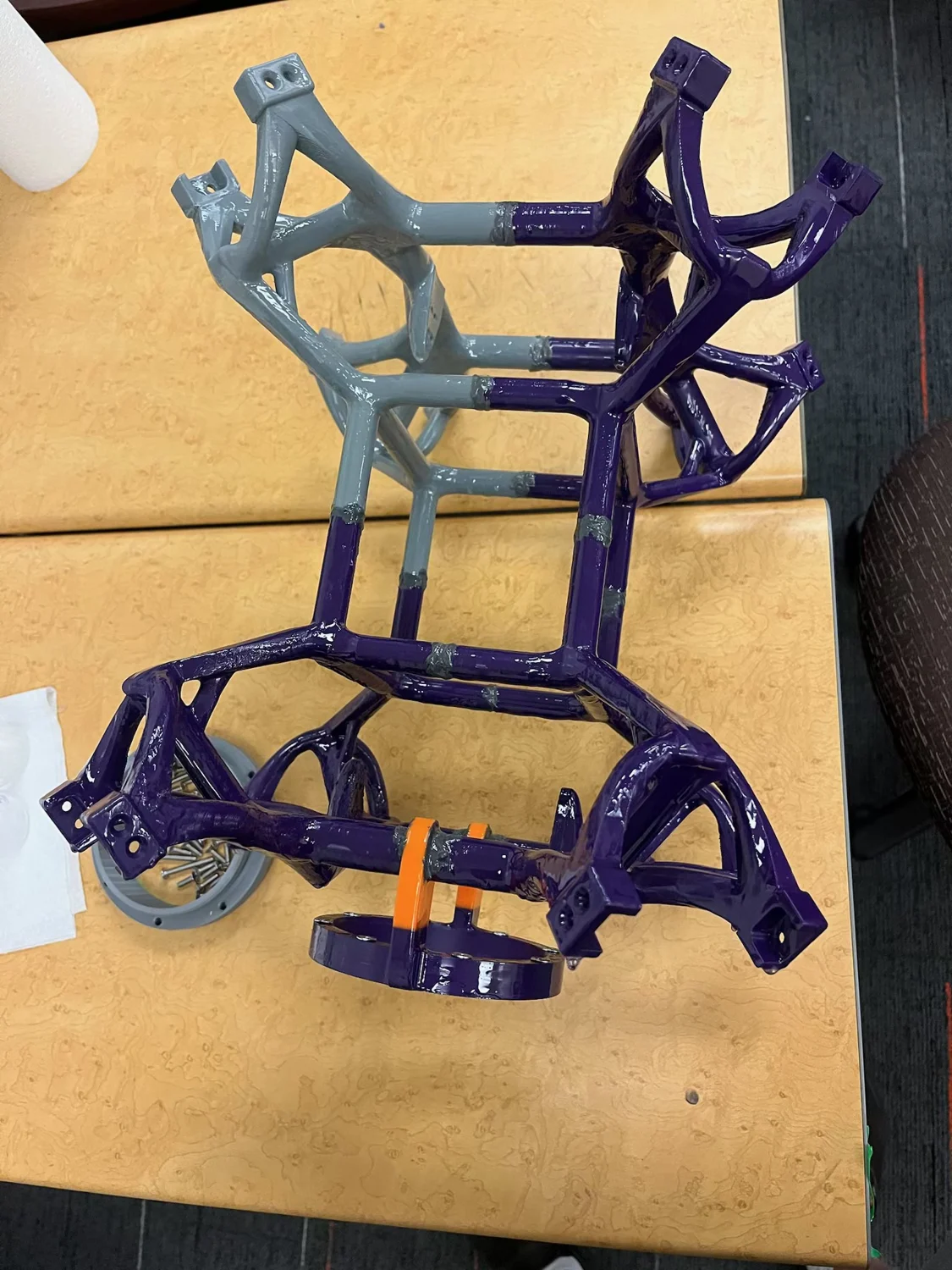
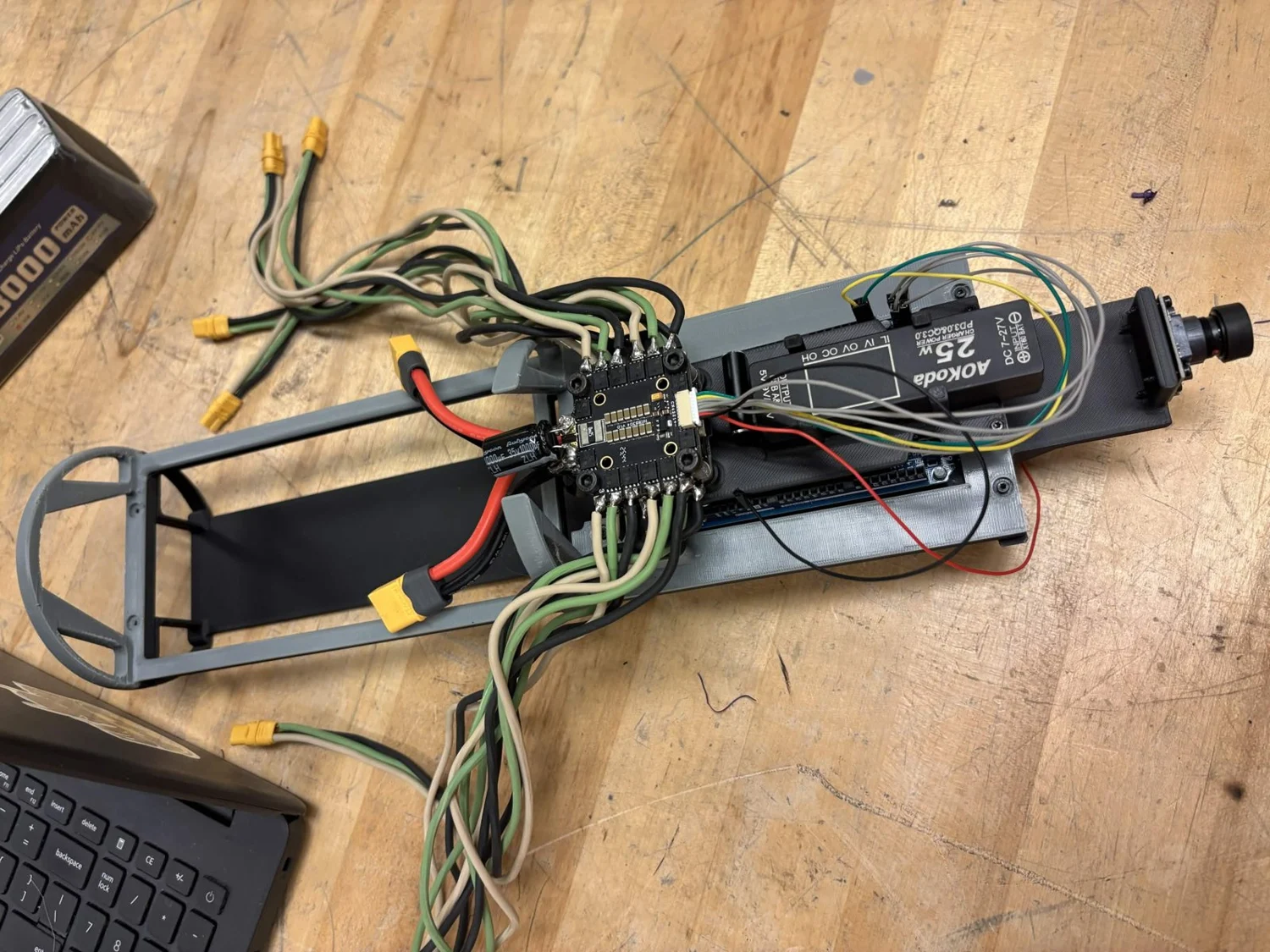
I designed the internal components and electronics, including the tray, as well as the motor-mount frame and body. I also finalized and reworked both endcaps, working closely with a teammate on the mechanical design.
I'm taking a major role in the software development, which is still underway. Physical assembly has been shared relatively evenly across the team.
Where my work connects
Mechanical packaging determines where the electronics fit. Wiring and sealing influence the endcap design. The motor arrangement then becomes a software and control problem. My role follows those connections through the vehicle.
Design & integration
Making the parts
fit the problem.
Mechanical packaging & fabrication
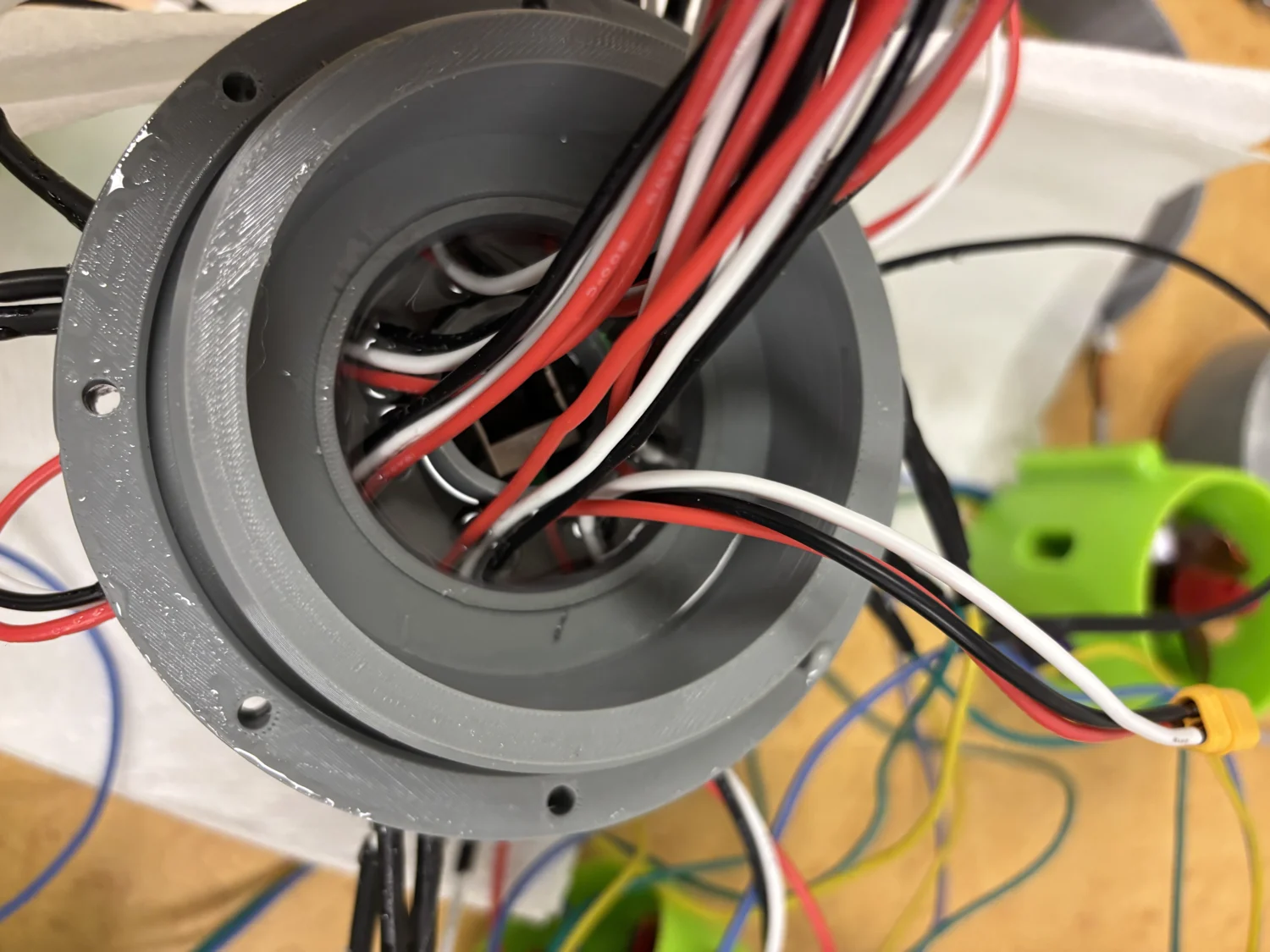
The outer frame holds eight thrusters around the hull. Internal components share a dedicated tray, while the endcaps bring together the front dome, sensor mounting, and rear wire penetrations. Printing, dry fits, rework, bonding, and sealing have all been part of the build.
Electronics & ongoing software
The electronics architecture uses a Raspberry Pi, an Arduino Mega, and motor-control hardware for the thrusters. My work includes the internal layout, electrical integration, and software development needed to connect the operator interface and onboard systems.
The full software pipeline is still being written and tested. Completing that integration and checking the motors through the assembled electrical chain are current priorities.
Outside. And within.
Explore the full N3M0 assembly or inspect the internal tray, electronics, and component packaging.
Build log
Progress from
the workbench.
Milestones from the team's engineering logbook. This record will grow as the vehicle moves through assembly, testing, and software integration.
Rear endcap sealed; frame coated
Completed the rear endcap epoxy pour, soldered the wire connector caps, coated the printed frame with epoxy, and added an IMU mounting location. Motor bench testing is the next verification step.
Next steps
From assembly
to verification.
The next planned work is to finish the assembly, cut the polycarbonate tube to length, bench-test the motors through the completed rear endcap, and begin water testing. In parallel, the team is developing and testing the full software pipeline.
Water-test results and an operational demonstration will be added after those milestones are reached.
Status reflects the October 6, 2026 engineering logbook. The vehicle is not yet presented as a completed or water-tested system.